Double Sheet Metal Sensor BDK Uno

Double Sheet Metal Sensor BDK Uno
Products

[accordionmenu id="uniqued994e88" accordionmenu="6404"]

double-sheet-metal-sensor-bdk-uno

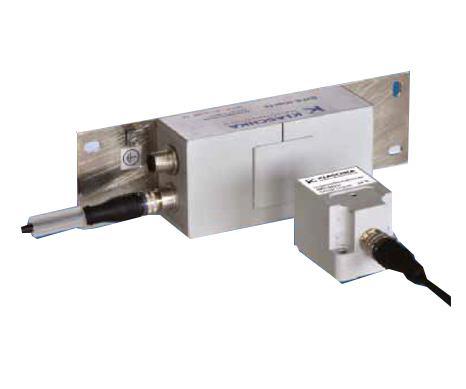
Double Sheet Metal Sensor BDK Uno

Double sheet metal monitors and thickness measurement devices monitor the automated destacking and separation of ferrous (Fe) or non-ferrous (NE) metal sheets in metal processing equipment (e.g. presses) with automatic feeding systems such as destackers, robots, feeders, etc. By detecting double sheets or thickness measurement, the presence of two or more sheets stuck together can be reliably detected and the process stopped before the tool or the machine itself are damaged. In the universal BDK system, especially the user-friendly BDK Compact or the very cost-effective BDK Uno and Duo sensors (which do not need an evaluation device), you are certain to find an optimum solution.

Description

BDK Uno Fe – Double Sheet Metal Sensor (without evaluation device, single-surface contact measurement) for thin ferrous (Fe) sheets.
BDK Uno NE – Double Sheet Metal Sensor (without evaluation device, single-surface contact measurement) for non-ferrous (NE) sheets.

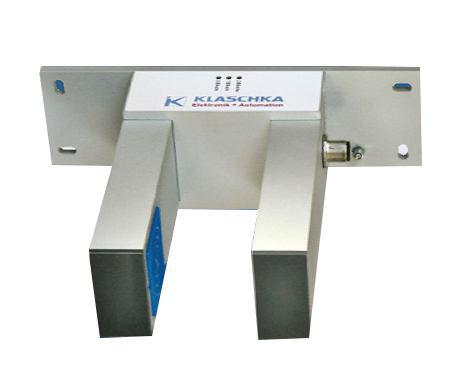
Double Sheet Metal Sensor BDK Duo

Double Sheet Metal Sensor BDK Duo

Products

[accordionmenu id="uniqued994e88" accordionmenu="6404"]

double-sheet-metal-sensor-bdk-duo

Double Sheet Metal Sensor BDK Duo

Double sheet metal monitors and thickness measurement devices monitor the automated destacking and separation of ferrous (Fe) or non-ferrous (NE) metal sheets in metal processing equipment (e.g. presses) with automatic feeding systems such as destackers, robots, feeders, etc. By detecting double sheets or thickness measurement, the presence of two or more sheets stuck together can be reliably detected and the process stopped before the tool or the machine itself are damaged. In the universal BDK system, especially the user-friendly BDK Compact or the very cost-effective BDK Uno and Duo sensors (which do not need an evaluation device), you are certain to find an optimum solution.

Description

Double Sheet Metal Sensor (without evaluation device, double-surface non-contact measurement) for non-ferrous (NE) and ferrous (Fe) sheets. Sensor especially suitable for conveyors and measurements in motion and at a standstill.

Double Sheet Metal Sensor BDK Duo Flex

Double Sheet Metal Sensor BDK Duo Flex

Products

[accordionmenu id="uniqued994e88" accordionmenu="6404"]

double-sheet-metal-sensor-bdk-duo-flex

Double Sheet Metal Sensor BDK Duo Flex

Double sheet metal monitors and thickness measurement devices monitor the automated destacking and separation of ferrous (Fe) or non-ferrous (NE) metal sheets in metal processing equipment (e.g. presses) with automatic feeding systems such as destackers, robots, feeders, etc. By detecting double sheets or thickness measurement, the presence of two or more sheets stuck together can be reliably detected and the process stopped before the tool or the machine itself are damaged. In the universal BDK system, especially the user-friendly BDK Compact or the very cost-effective BDK Uno and Duo sensors (which do not need an evaluation device), you are certain to find an optimum solution.

Description

Double Sheet Metal Sensor (without evaluation device, double-surface non-contact measurement) for non-ferrous and ferrous sheets. Variable mounting of the transmitting and the receiving module. Sensor especially suitable for conveyors and measurements in motion and at a standstill.

DOUBLE PULSE

DOUBLE PULSE

Products

[accordionmenu id="uniqued994e88" accordionmenu="6404"]

double-pulse

DOUBLE PULSE

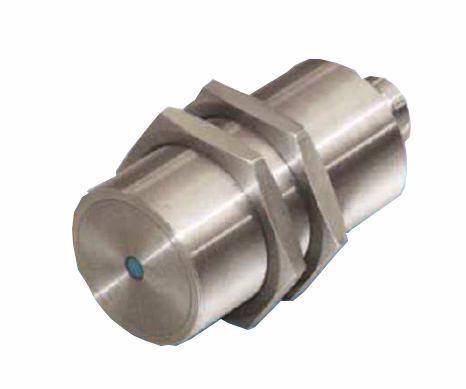
Unlike inductive proximity switches pulse sensors are, due to their high geometrical resolving power, suitable for the detection of fine structures and motions. (Not suitable for axial approximation and non-magnetizable materials). Prefered tasks are the determination of rotational speed and direction of rotation of waves by gear wheels starting from module 0.3. Thus these sensors can be used particularly as incremental sensors, for counting tasks and for position control. With these sensors it is possible to detect racks or magnetic tapes in order to detect the speed and direction of linear motions.

  • high switching distances up to 25 kHz
  • static (standstill from 0 Hz) and dynamic operation
  • high resolution (< module 1)
  • robust housings
  • increased ambient temperature ranges from approx. -25 to + 120 °C

Description

Hall element double switches are preferably used for the detection of positions and direction of motion of by-passing rack rails.

  • 2 outputs, RS-422
  • high switching frequency up to 15 kHz
  • static (standstill from 0 Hz) operation
  • double resolution
HEAT-RESISTANT

HEAT-RESISTANT

Products

[accordionmenu id="uniqued994e88" accordionmenu="6404"]

heat-resistant

HEAT-RESISTANT

Unlike inductive proximity switches pulse sensors are, due to their high geometrical resolving power, suitable for the detection of fine structures and motions. (Not suitable for axial approximation and non-magnetizable materials). Prefered tasks are the determination of rotational speed and direction of rotation of waves by gear wheels starting from module 0.3. Thus these sensors can be used particularly as incremental sensors, for counting tasks and for position control. With these sensors it is possible to detect racks or magnetic tapes in order to detect the speed and direction of linear motions.

  • high switching distances up to 25 kHz
  • static (standstill from 0 Hz) and dynamic operation
  • high resolution (< module 1)
  • robust housings
  • increased ambient temperature ranges from approx. -25 to + 120 °C

Description

Hall element switches for increased temperature ranges are also used in drives. They are preferably suitable for the detection of rotational speed and direction of rotation of waves by gear wheels starting from module 0.3. They can be used as incremental sensors, for counting tasks and for position control. They can also take up the speed and direction of linear movements by the detection of racks.

  • high switching frequencies up to 20 kHz
  • static (standstill from 0 Hz) and dynamic operation
  • high resolution (< module 1)
  • robust housing
  • increased ambient temperature ranges approx. -25 to + 100 °C