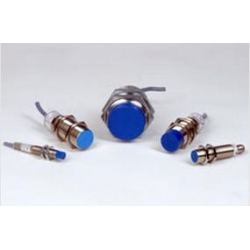
ANALOGUE SENSORS

ANALOGUE SENSORS

Products

[accordionmenu id="uniqued994e88" accordionmenu="6404"]

analogue-sensors

ANALOGUE SENSORS

NON-FERROUS METAL

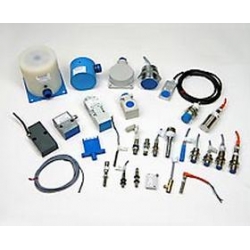
Inductive proximity switches for machines and plants are non-contact- and contactless operating sensors for the movement of drives and mechanical components, which are not subject to mechanical wear. They are mainly used as limit switches, but due to their robustness (completely moulded) and their high switching frequency they can also be used for many other tasks, for example as pulse sensors for the rotational speed detection.

They are preferably used where high switching frequencies and operating speeds, switching point precision and reliability, operation under less favourable conditions (e. g. under water) and high durability are required.

Klaschka launched the first inductive proximity switch already in 1964. Today the sensor range includes more than 1,500 different types. The types specified here represent a selection and are usually available from stock. In addition we offer a large number of standard- and customer-specific executions, whose technical data we gladly send our customers on demand.

  • sturdy
  • high switching frequencies
  • high load currents
  • safe against short-circuits, interference voltages, confounding of terminals

Description

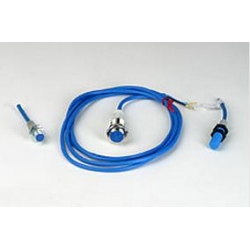
Inductive Distance Sensors (Analogue Sensors) for distance measurement

sturdy, free of wear

high resolution and sensitivity

EXTENDED SURFACE

EXTENDED SURFACE

Products

[accordionmenu id="uniqued994e88" accordionmenu="6404"]

extended-surface

EXTENDED SURFACE

NON-FERROUS METAL

Inductive proximity switches for machines and plants are non-contact- and contactless operating sensors for the movement of drives and mechanical components, which are not subject to mechanical wear. They are mainly used as limit switches, but due to their robustness (completely moulded) and their high switching frequency they can also be used for many other tasks, for example as pulse sensors for the rotational speed detection.

They are preferably used where high switching frequencies and operating speeds, switching point precision and reliability, operation under less favourable conditions (e. g. under water) and high durability are required.

Klaschka launched the first inductive proximity switch already in 1964. Today the sensor range includes more than 1,500 different types. The types specified here represent a selection and are usually available from stock. In addition we offer a large number of standard- and customer-specific executions, whose technical data we gladly send our customers on demand.

  • sturdy
  • high switching frequencies
  • high load currents
  • safe against short-circuits, interference voltages, confounding of terminals

Description

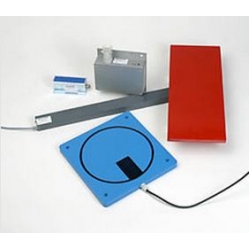
Inductive extended surface switches serve for the detection of metal parts which differ in form, size and position. Due to the extended sensing surface it is not necessary to position the parts exactly. Typical applications are the detection of parts for the disconnection of conveyors, scouts in driverless transport systems, body detection- and positioning in production lines. For the supervision of the straight tracking of conveyer systems the difference of the output voltages of two extended surface analog sensors can be calculated by means of an evaluation device.
  • all metal
  • sturdy
  • free of wear
  • high switching frequencies
  • extended ambient temperature range
  • magnetic field-resistant
FERROUS NAMUR

FERROUS NAMUR

Products

[accordionmenu id="uniqued994e88" accordionmenu="6404"]

ferrous-namur

FERROUS NAMUR

NON-FERROUS METAL

Inductive proximity switches for machines and plants are non-contact- and contactless operating sensors for the movement of drives and mechanical components, which are not subject to mechanical wear. They are mainly used as limit switches, but due to their robustness (completely moulded) and their high switching frequency they can also be used for many other tasks, for example as pulse sensors for the rotational speed detection.

They are preferably used where high switching frequencies and operating speeds, switching point precision and reliability, operation under less favourable conditions (e. g. under water) and high durability are required.

Klaschka launched the first inductive proximity switch already in 1964. Today the sensor range includes more than 1,500 different types. The types specified here represent a selection and are usually available from stock. In addition we offer a large number of standard- and customer-specific executions, whose technical data we gladly send our customers on demand.

  • sturdy
  • high switching frequencies
  • high load currents
  • safe against short-circuits, interference voltages, confounding of terminals

Description

Inductive proximity switches as two-pole version according to NAMUR DIN 60947-5-6 can be employed in explosion-safe areas for the contactless detection of ferrous metals (for NF-metals apply reduction factors according to data sheet).

Current supply- and transformation of the output signal take place via accessory devices.

FERROUS, THREE- AND FOUR-POLES

FERROUS, THREE- AND FOUR-POLES

Products

[accordionmenu id="uniqued994e88" accordionmenu="6404"]
ferrous-three-and-four-poles

FERROUS, THREE- AND FOUR-POLES

NON-FERROUS METAL

Inductive proximity switches for machines and plants are non-contact- and contactless operating sensors for the movement of drives and mechanical components, which are not subject to mechanical wear. They are mainly used as limit switches, but due to their robustness (completely moulded) and their high switching frequency they can also be used for many other tasks, for example as pulse sensors for the rotational speed detection.

They are preferably used where high switching frequencies and operating speeds, switching point precision and reliability, operation under less favourable conditions (e. g. under water) and high durability are required.

Klaschka launched the first inductive proximity switch already in 1964. Today the sensor range includes more than 1,500 different types. The types specified here represent a selection and are usually available from stock. In addition we offer a large number of standard- and customer-specific executions, whose technical data we gladly send our customers on demand.

  • sturdy
  • high switching frequencies
  • high load currents
  • safe against short-circuits, interference voltages, confounding of terminals

Description

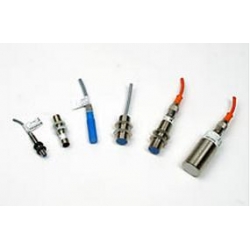
Inductive proximity switches of this series allow the contactless detection of ferrous metals (for NF- metals apply reduction factors according to the respective data sheet). They are not subject to mechanical wear and are mainly used as limit switches. Due to their robustness (completely moulded) and their high permissible switching frequency they can also be employed for many other tasks, for example as pulse sensors for the rotational speed detection.

They are preferably used where high switching frequencies and operating speeds, a switching point precision and reliability as well as the operation under less favourable conditions (e.g. under water) as well as a high durability are required.

FERROUS, TWO-POLES

FERROUS, TWO-POLES

Products

[accordionmenu id="uniqued994e88" accordionmenu="6404"]
ferrous-two-poles

FERROUS, TWO-POLES

NON-FERROUS METAL

Inductive proximity switches for machines and plants are non-contact- and contactless operating sensors for the movement of drives and mechanical components, which are not subject to mechanical wear. They are mainly used as limit switches, but due to their robustness (completely moulded) and their high switching frequency they can also be used for many other tasks, for example as pulse sensors for the rotational speed detection.

They are preferably used where high switching frequencies and operating speeds, switching point precision and reliability, operation under less favourable conditions (e. g. under water) and high durability are required.

Klaschka launched the first inductive proximity switch already in 1964. Today the sensor range includes more than 1,500 different types. The types specified here represent a selection and are usually available from stock. In addition we offer a large number of standard- and customer-specific executions, whose technical data we gladly send our customers on demand.

  • sturdy
  • high switching frequencies
  • high load currents
  • safe against short-circuits, interference voltages, confounding of terminals

Description

Inductive proximity switches for machines and plants are non-contact- and contactless operating sensors for the movement of drives and mechanical components, which are not subject to mechanical wear. They are mainly used as limit switches, but due to their robustness (completely moulded) and their high switching frequency they can also be used for many other tasks, for example as pulse sensors for the rotational speed detection.

They are preferably used where high switching frequencies and operating speeds, switching point precision and reliability, operation under less favourable conditions (e. g. under water) and high durability are required.

Klaschka launched the first inductive proximity switch already in 1964. Today the sensor range includes more than 1,500 different types. The types specified here represent a selection and are usually available from stock. In addition we offer a large number of standard- and customer-specific executions, whose technical data we gladly send our customers on demand.

  • sturdy
  • high switching frequencies
  • high load currents
  • safe against short-circuits, interference voltages, confounding of terminals